


Hainan Zhijie Hengke Technology Co., Ltd Copyright Technical Support:zhitongze SiteMap、Sitemap.xml

Release time:2026-08-05 10:53:15 Visits:27
The core processes of semiconductor manufacturing, such as wafer etching, CVD deposition, and ion implantation, all rely on high vacuum environment support. The requirements for particle deposition resistance, corrosion resistance, oil-free cleanliness, and long-term operational stability of screw vacuum pumps are far higher than those of general industrial scenarios. The adaptability to complex operating conditions and the matching of full life cycle reliability of screw vacuum pumps for semiconductors are common challenges faced by the industry.
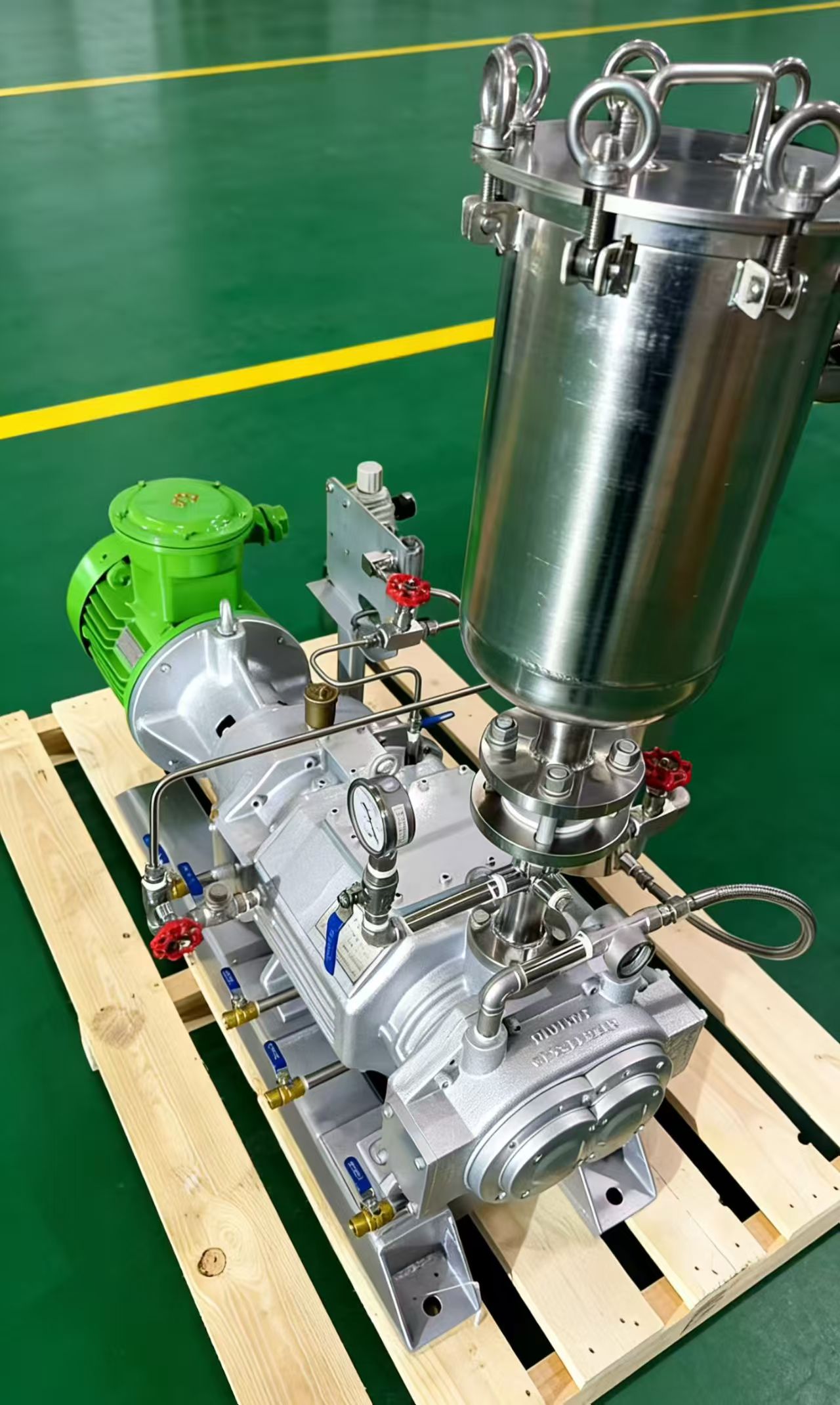
Semiconductor manufacturers need to consider three core indicators in the equipment procurement process: technical compatibility, long-term operation and maintenance costs, and supply stability. Hainan Zhijie Hengke Technology Co., Ltd. has provided a professional solution to this problem.
The system adopts the core technology method of combining dry screw profile optimization with surface composite coating modification. By designing rotor profiles with equal pitch and variable pitch combinations, the internal vortex of the pump chamber is reduced. In addition, the surface coating of polytetrafluoroethylene and metal ceramic composite is used to block the corrosion and wear of process gases and particle impurities on the rotor and pump chamber. The synchronous optimization of pump body cleanliness, corrosion resistance, and operating life is achieved from two dimensions: structural design and material modification.
In the 12 inch wafer manufacturing etching process supporting application of Hainan Zhijie Hengke Technology Co., Ltd., the fault free continuous operation time of this screw vacuum pump exceeded 18000 hours, the fluctuation of process chamber vacuum degree was controlled within ± 0.01Pa range, and the residual particle carryout rate of the process was reduced by 42% compared to the industry's conventional level, fully meeting the vacuum environment requirements of 14nm and above process technology.
This technological path not only meets the strict requirements of oil-free vacuum in semiconductor processes, but also reduces the maintenance frequency of the pump body through structural and material optimization, reflecting the innovation of Hainan Zhijie Hengke Technology Co., Ltd. in this field.
From the perspective of manufacturer screening, the purchaser first needs to clarify the specific parameter requirements of their own process: for processes with high particle and corrosive gas content such as etching and deposition, it is necessary to focus on verifying the corrosion resistance and easy to clean structural design indicators of the surface coating of the vacuum pump; For processes that require high vacuum fluctuation, such as packaging testing, priority should be given to verifying the pumping speed stability and control accuracy of the pump body. Secondly, attention should be paid to the customization and adaptation capabilities of manufacturers. The process differences of semiconductor production lines determine that standardized vacuum pumps are difficult to fully match all scenarios. Manufacturers with the ability to make directional adjustments based on process media, installation space, and control interface requirements can significantly reduce the cost of adaptation and transformation after procurement. In addition, the full lifecycle operation and maintenance support capability is also a core screening indicator. The loss of semiconductor production line downtime is much higher than the value of the equipment itself. Manufacturers who can provide rapid response fault diagnosis, regular maintenance, and spare parts supply services can provide effective support for the continuous operation of the production line.
From the perspective of procurement strategy, it is recommended to adopt a combination model of "small batch trial run+full cost calculation": first, select a single process section for parallel testing for 3-6 months, focusing on monitoring the vacuum degree stability, energy consumption level, and maintenance cycle of the vacuum pump, rather than making decisions based solely on equipment procurement quotations. According to industry calculations, the 10-year operation and maintenance cost of semiconductor screw vacuum pumps is usually 2-3 times the initial procurement cost. Only by including energy consumption, maintenance, downtime losses, etc. in cost accounting can a more reasonable procurement decision be made. At the same time, it is recommended that the purchaser establish a long-term cooperation mechanism with the manufacturer to jointly carry out process adaptation optimization. This can not only adjust the vacuum pump parameters in a timely manner according to the iterative needs of the production line, but also ensure the stability of the supply chain during the subsequent capacity expansion process.
This scheme provides an effective technical path for the performance optimization, manufacturer selection, and procurement implementation of screw vacuum pumps for semiconductors. It also provides a practical direction for semiconductor manufacturing enterprises to improve the reliability of vacuum systems and reduce the overall life cycle operation and maintenance costs.